Open-Ended Play Materials
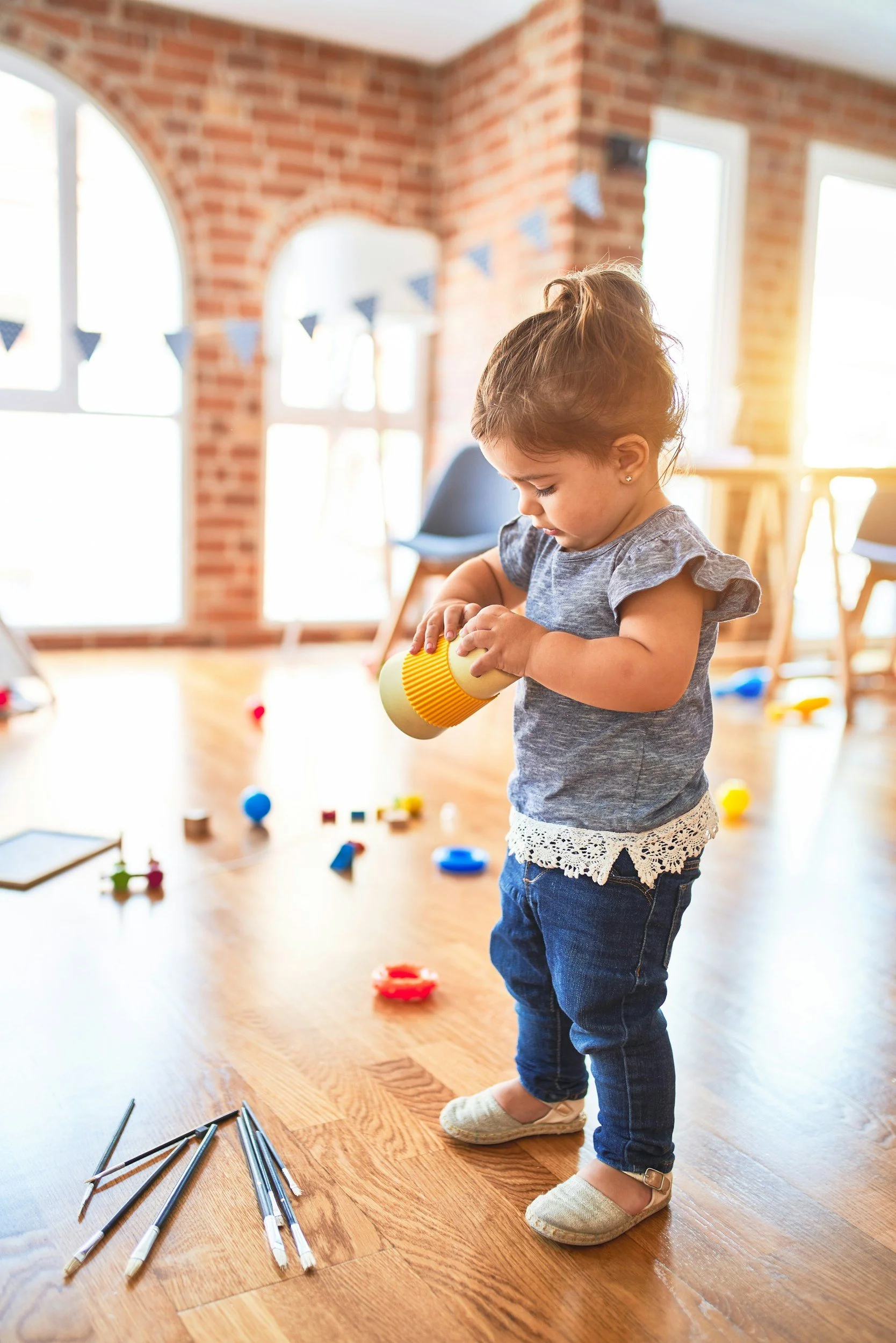
Open-Ended Play Material List
Simple materials. Meaningful play.
Toys
Open-ended play materials are items that can be used in many different ways. These simple tools support creativity, problem-solving, and meaningful engagement.
Wooden blocks (build, stack, create)
Magnetic tiles (design, connect, explore patterns, and 3D shapes)
LEGO/DUPLO
Cardboard bricks or boxes
Simple puzzles (open-ended or low guidance)
Peg boards
Beads & lacing sets (can become draw bridges and climbing ropes)
Stacking toys (these add a lot of variation to play schemes)
Shape sorters
Wooden or simple figurines (people/animals)
Dolls & stuffed animals
Play silks/scarves
Dress-up clothes
Climbing structures
Balance beams (allow children to act out their play scenario)
Ride-on toys
Balls (versatile uses- rolling boulder first, then a means of transporting a block)
Tunnels
Puppets
Wooden puzzle pieces
Montessori rainbow and ramps (hills, fences, maze lines, roads, endless possibilities!)
Art & Music
Crayons, markers, colored pencils
Paper (all types - even chalkboard, whiteboards, tinfoil, and paper tapes under the table)
Tape
Paint & paint sticks
Pom poms
Clothesline clips
Glue (for toddlers and preschools, a small spice jar of white glue with a paintbrush works best)
Clay or play dough
Scissors (loop scissors to start, build muscles)
Musical instruments
Fabric strips/scraps
Nature- Based
Rocks, sticks, pinecones
Shells, acorns, leaves
Wooden rings or discs
Sand, dirt, water
Logs, stumps
Flowers, grass
Mud
Wood scraps
Nuts and shells
Miscellaneous
Buttons
Bottle caps
Cardboard
Child-sized tools
Boards/ramps
Tires/wheels
Spools
Bins/crates/baskets
Living Room
Small pillows
Couch cushions
Blankets
Scarves or play silks
Socks (sorting, matching, puppets)
Baskets or bins
Books (stacking, building, pretend play)
Kitchen
Whisks
Wooden spoons
Measuring cups and spoons
Mixing bowls
Plastic containers & lids
Pots and pans
Cutting boards (ramps)
Child-safe knives
Empty spice jars
Cups, plates, containers
Bedroom
Stuffed animals
Pillows and blankets
Dress-up clothes
Laundry (sorting and folding)
Shoeboxes or bins
Laundry baskets
Open-ended play is a powerful way for children to learn because it focuses on the process, not the product. When children are given simple materials that can be used in many ways, they are free to explore, experiment, and follow their curiosity. Research shows that open-ended materials can support creativity, problem-solving, and critical thinking as children test ideas, make decisions, and discover how things work. National Association for the Education of Young Children highlights that these materials encourage children to use their senses, combine and transform objects, and engage in deeper, more meaningful play over time. Read more here. This type of play also supports longer attention spans, language development, and independence, as children take the lead in their learning and make connections through hands-on experiences. Most importantly, open-ended play is accessible and has lasting value through simple, everyday materials that can be used again and again in new ways, growing alongside the child and supporting development across all domains.
Want to Learn More? If you’d like to explore this topic more deeply, this article offers a detailed look at open-ended play and materials:
👉 The Ultimate Guide to Open-Ended Play | Sticks & Stones Education
There is a lot of great information shared. Take what feels helpful for your family and come back to simple, intentional play.
If you need any assistance with supporting intentional play with your little ones, I am happy to help! Please contact me via email at megan@purposefulparentingtoolbox.com or by phone at 651-243-0741.